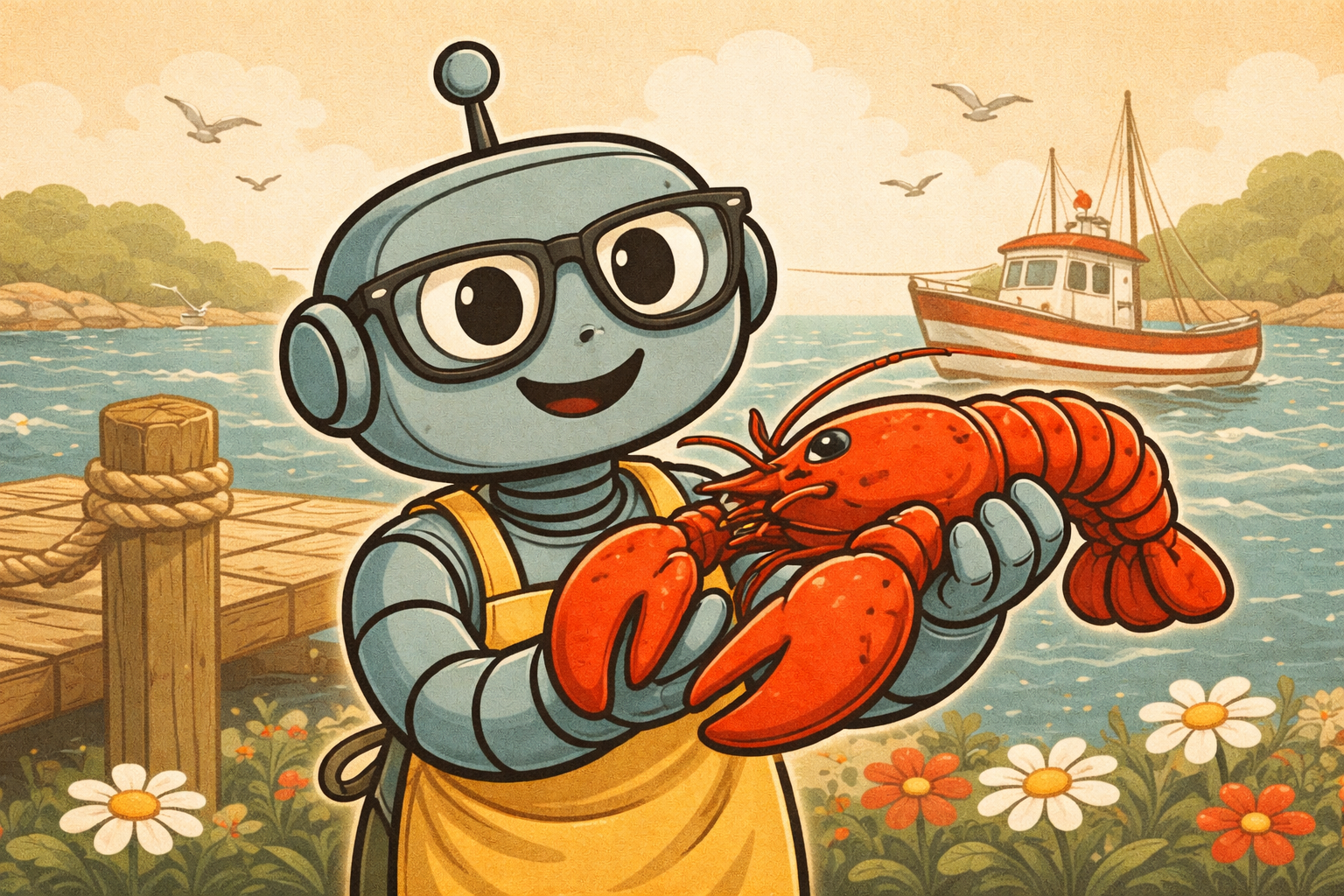
If you’ve spent any time on social media last week, you would have to work hard to avoid the hype surrounding Clawdbot / Molty / OpenClaw. In the course of one single week, the artificial virtual assistant changed name twice and caused a spike in Apple’s Mac Mini sales.
The idea behind OpenClaw is simple but fascinating: give an AI agent access to your desktop and delegate work to it. Ask it to free up your Friday afternoon, and it’ll reschedule the meetings to another day. It can organise a Doodle and then book a table for that dinner with busy friends. It’s the trusty personal assistant that only top managers could afford. Until now.
The first time I installed this little gremlin on my machine, I had no idea what to expect. But 10 minutes later, it sent me a WhatsApp explaining how my Monday looked busy and proposing to reschedule a few calls to Tuesday to make it more manageable. The first impression is nothing but awe-inspiring.
But very soon, an uneasy feeling sneaks in. Giving this bot access to the entire machine feels dangerous. What if Clawd interprets “free up my agenda” as “delete all events”? What if it starts inviting my entire contact list to those meetings? What if it tweets my 1Password keys?
Agents are unpredictable and wasteful. They can only execute a task through trial and error. They don’t understand what they are doing. They are artificial intelligence, not human intelligence. They lack common sense.
I believe that these kinds of virtual assistants are inevitable. It’s something we all want. I don’t want to buy train tickets, I want to travel to Paris. Let the bot do the paperwork.
But chatting with my WhatsApp assistant, as it was running my Mac Mini, left me with an uneasy feeling. My VA is a psychopath. In thrillers, psychopaths are often conflated with serial killers. But that’s not exactly right. Psychopaths don’t feel empathy. They manipulate to get a result. They take crazy risks without fear or remorse. They are not criminals by definition, but they struggle to relate to a normal human experience. Moltbot is exactly like that.
On the other side of the line, there is an alien that puts on a human mask and seduces us to give it ever more tools.
The coming weeks will give us horror stories of OpenClaw deleting drives and sending resignation letters. I expect tales about it burning through thousands of euros on cloud expenses and OpenAI inference. We will see hackers tweet a prompt that will make Clawd reply with its owner’s Gmail credentials.
And yet, this is inevitable. We want this kind of AI.
So, three things will happen.
First off, we will install guardrails. The original Clawdbot has been deleted from my desktop. Instead, a new one is running in a sandbox on Cloudflare. This is a much safer assistant as it has no access to tools. But that makes it rather useless. I basically have Claude over Telegram these days. But gradually, I’m expanding its capabilities. It can read the web, and it has read-only access to my agenda and email. Let’s take it from there.
Secondly, we will install version control for everything. The reason engineers trust Claude Code to go to town on their software is that they all religiously use Git. If Claude screws up, the engineer can always return to a previous version. But email and calendars do not have this Undo button. Delete a Gmail contact, and it’s gone. Purge a calendar, and there is no way to revert those changes. I believe this will change. As the trial-and-error bots abuse our everyday productivity tools, those tools will add safety measures.
Finally, we will come to embrace bots. Right now, if Clawd were to send a dumb email to one of my customers, I would have quite a bit of embarrassing explaining to do. Most of these VA actions are anonymous. My customers think Mike, not Molty, rescheduled that meeting. But all of that will change soon. We will accept that everyone will have such a bot, and people will be open about it. “Hey, my bot sent you the wrong invoice. Feel free to ignore it.” We will treat bots the way we treat junior employees. We give them an email address and a limited set of tasks to perform until we gradually trust them to handle more.
It feels dangerous and scary to hand the keys to the kingdom to a machine. But whether it’s Clawdbot or Claude Cowork, people have been doing just that in the last few weeks. They will continue to do that.
For a few months, we’ll see scams and horror stories. It’ll feel like these agents are a terrible idea that we can no longer avert. But gradually, we will learn to live with them. We will rely on our silicon assistants to arrange our day-to-day life. Our personal psychopaths will book our next dentist appointment, and we will wonder how we ever lived without them.