Every AI-powered product these days gets asked the same critical question: “Why use your tool? Why not just ask Claude?”
There are many answers to this question, but one is far better than all others.
“Would you trust Claude to do it?”
The most interesting AI products out there are not solving agentic orchestration or building AGI. They handle boring business workflows in a reliable way. These workflows consist of strategic decision-making, verification steps and what I call “tiny decisions”.
“Is this an invoice?”
“Is this an existing customer?”
“Have we followed up on that contract?”
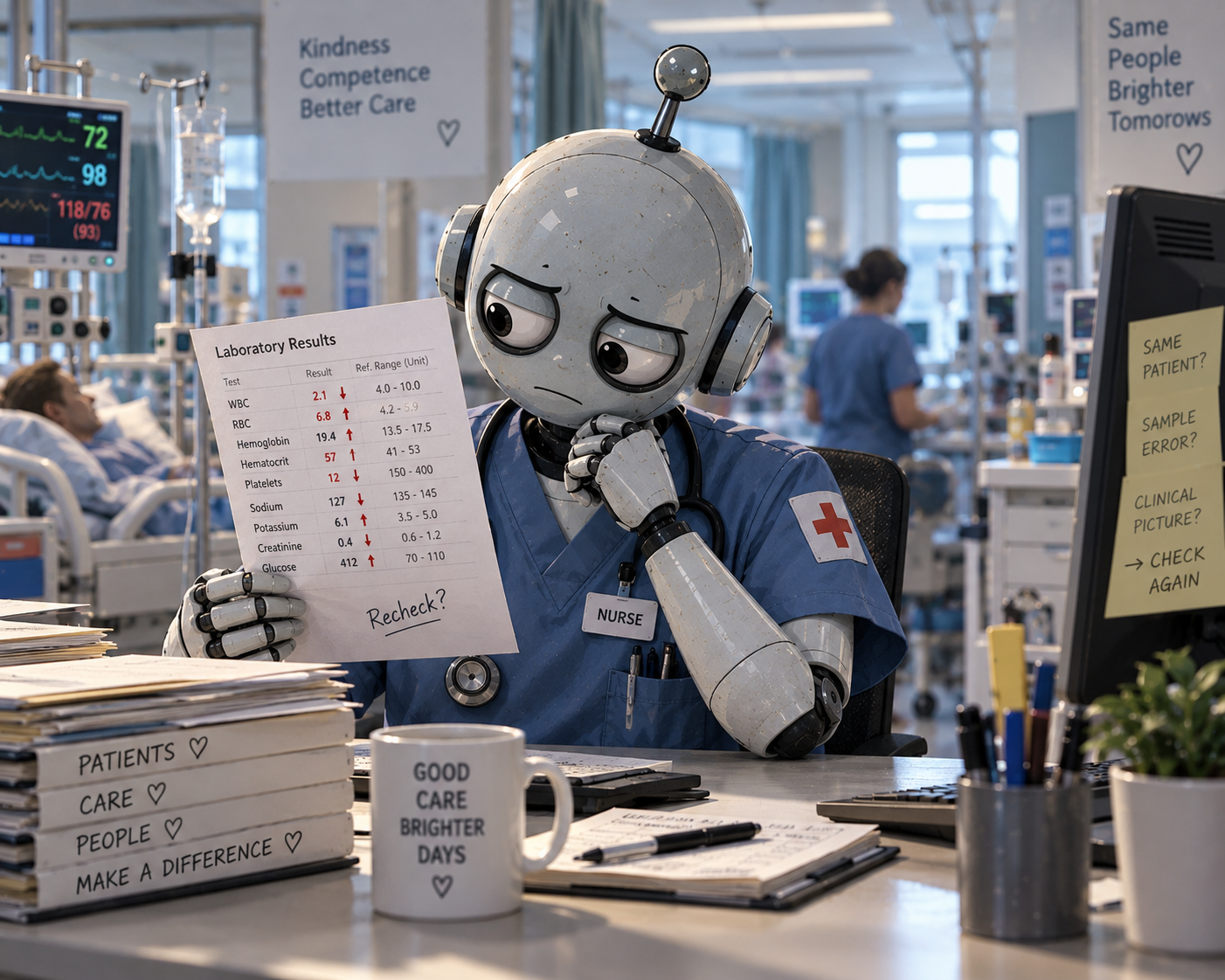
Knowledge workers spend at least half their time making these boring “tiny decisions”. That’s not where we want to waste the brainpower of our smartest and most expensive people. An experienced nurse has better things to do than verify that the bloodwork looks normal. She’s interested in the cases where the results are off.
The big promise of AI-powered tools is that we can free up knowledge workers from tiny decisions so they can do the real work.
But for that, we need AI we can trust.
Yes, we could ask Claude. Claude can tell us whether the bloodwork is OK, and its confident answer will often be right. But no nurse worth their salt will treat a patient based on an LLM’s answer.
To build a system these nurses can rely on, we need to build something with three particular properties.
First off, we need explainability. Claude cannot tell us why it replied: “all good”. An AI-we-can-trust needs to be able to show which checks and balances lead it to the conclusion. We need audit trails and a clear, traceable decision tree.
On top of that, the system needs to be almost deterministic. Running the same bloodwork multiple times should give us the same result. That’s not in the nature of LLMs, and it certainly goes against everything “agents” stand for. But in order to trust such a system, the hallucinations need to be tamed. In practice, that means a lot of double-checks and hard-coded verification.
Finally, the system cannot cover all cases. It has a range of what it can handle, and it forwards all other cases to the human specialist. Every single one of these systems I have seen, produces a briefing for the specialist: these 6 checks are green, these 2 are definitely red, and I need you to look at these 3 amber ones. This “traffic light” is a clear tell of AI-you-can-trust.
I’m convinced that these bespoke AI-powered workflow engines are the future of software. They solve a real problem while freeing up human brains to do the more interesting stuff. This kind of automation can be brought to every “boring” field out there. From legal to health. From insurance to customer support. From regulations to fintech.
So, yes, you could ask Claude whether a contract is legal. It will give you an answer. It might even be right.
But no, you can’t sign a contract just because Claude says it’s OK.
For that, you need an AI you can trust.